Home › Guides › Grease traps in Florida
Grease traps in Florida: rules, manifests, fines and haulers
- Pick what you need and give your kitchen's ZIP code.
- Each service goes to the number of local companies you choose, from one to five. We check licenses where the law requires one and email you their names.
- You talk with them and decide. You hire and pay the company directly.
Facts checked 2026-11-02.
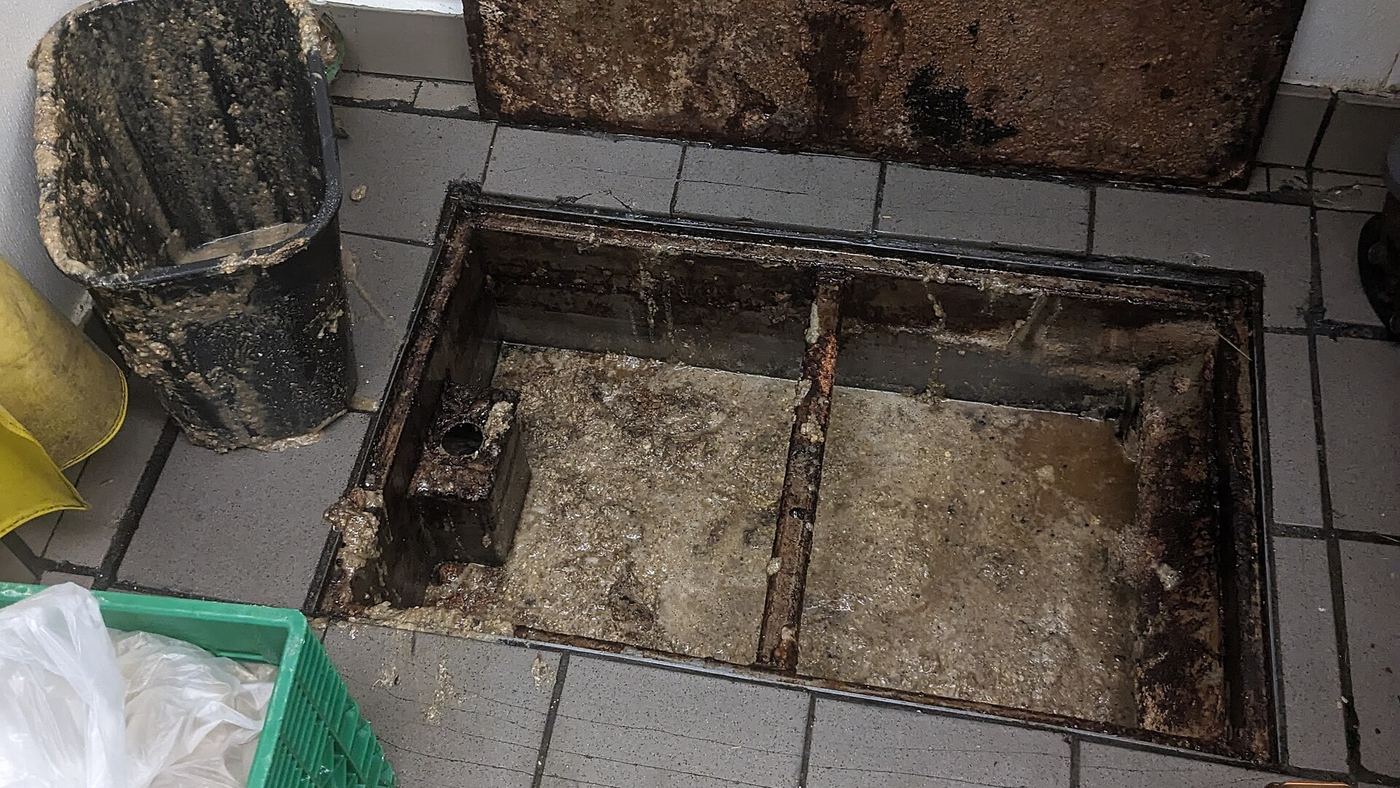

In Florida only a licensed grease hauler can pump and haul your grease trap, unless you qualify as a self-cleaner. Every pumping needs a signed service manifest, and you keep a copy for a year. The state sets the paperwork and the fines. Your local utility or county sets how often the trap must be pumped, and those rules can be stricter than the state's.
What the state requires
Florida's grease waste law is section 403.0741 of the Florida Statutes. The Florida Department of Environmental Protection (FDEP) runs the program under Chapter 62-705 of the Florida Administrative Code, which took effect on December 7, 2025.
FDEP and the statute define who does what:
- Licensed haulers only. Licensed grease haulers and self-cleaners are the only ones allowed to remove and transport grease waste.
- Your duty as the restaurant. The law calls restaurants and similar kitchens "originators". You arrange regular cleaning of the trap and make sure the hauler gives you a service manifest. You keep a signed copy.
- Self-cleaner. An originator whose trap holds 55 gallons or less, and who removes and hauls its own waste. A self-cleaner follows the hauler rules except for the license.
New haulers apply for the license 30 days before they start. Existing haulers had until June 5, 2026. Haulers renew by March 1 each year, and the license expires April 1.
The hauler has to take the waste to a disposal facility. It may not put grease waste or graywater back into your trap. Disposal facilities that FDEP does not already permit have until December 7, 2026 to apply.
FDEP's grease waste contact is 850-245-8705 or [email protected].
The service manifest
Every job gets a manifest. Under the statute:
- You and the hauler sign it if the work happens during your open hours. If you are closed, the hauler leaves a signed copy.
- The disposal facility signs it.
- Within 30 days after disposal, the hauler sends a signed copy to you and to the county and the city where your restaurant is.
- You and the hauler each keep a signed copy on site for one year.
An inspector can check that you have a contract with a hauler and a record of the trap being cleaned. Ask the hauler for the manifest every time. If it does not arrive, call the hauler.
A local company can take it from here. One form, free for restaurants.
Get connectedFines
The statute sets minimums and maximums:
| Violation | Penalty |
|---|---|
| Manifest not provided or not kept | Up to $100 for each failure |
| Failure to clean a trap | Up to $250 for each failure |
| Unlawful disposal of grease waste | At least $2,500 |
| Second or later unlawful disposal | At least $5,000 |
| License suspension or revocation | At least 30 days suspension, or at least 12 months revocation |
How often a trap must be pumped
The state law does not set a pumping interval, and we did not find a statewide schedule. Local governments set it, usually through the utility that takes your wastewater, and it varies by place. Ask your utility or county for the rule that applies to your address. These pages cover some counties:
The state law lets local governments adopt ordinances that are stricter or wider than the state rules. Small and fiscally constrained counties can opt out of parts of the state section, so a local rule may govern your site.
What the building code says about traps
The Florida Building Code, Plumbing, requires a grease interceptor or an automatic grease removal device for fixtures that send grease-laden waste to the drain. These fixtures include:
- Pot sinks and prerinse sinks.
- Soup kettles and wok stations.
- Floor drains or sinks that kettles drain into.
- Automatic hood wash units.
- Dishwashers without a prerinse sink.
A food waste disposer may not discharge to a grease interceptor. Additive systems are restricted. Systems that discharge emulsifiers, chemicals or enzymes to the interceptor are prohibited, and only microbial additives that the maker allows are accepted. The interceptor is sized from a code table based on flow. An interceptor sized under the septic rules in Rule 64E-6 and located outside the building has a separate exception.
New kitchens get these items reviewed during plan review and permitting. See opening a restaurant.
Used cooking oil bins fall outside the grease waste rules
The state law says the term "interceptor or trap" leaves out receptacles designed specifically for collecting used cooking oil or fats and bones. A bin for fryer oil is not covered by the grease waste rules. See used cooking oil.
Say when the trap needs pumping on the form, and we'll pass the request to one local grease hauler.
Questions
Who can pump a restaurant grease trap in Florida?
A licensed grease hauler, or a self-cleaner whose trap holds 55 gallons or less. FDEP's program page describes both.
Do I need to keep grease trap pumping records in Florida?
Yes. You and the hauler each keep a signed copy of the grease trap service manifest on site for one year.
How often does a grease trap need pumping?
The state law sets no interval. Your local utility or county sets one, and it varies. Ask the utility that takes your wastewater.
What is the fine for not keeping a grease trap manifest?
Up to $100 for each failure under the state statute. Failing to clean a trap can cost up to $250 for each failure.