Home › Guides › Opening a restaurant in Florida
Opening a restaurant in Florida: plan review, permits, steps
- Pick what you need and give your kitchen's ZIP code.
- Each service goes to the number of local companies you choose, from one to five. We check licenses where the law requires one and email you their names.
- You talk with them and decide. You hire and pay the company directly.
Facts checked 2026-11-02.
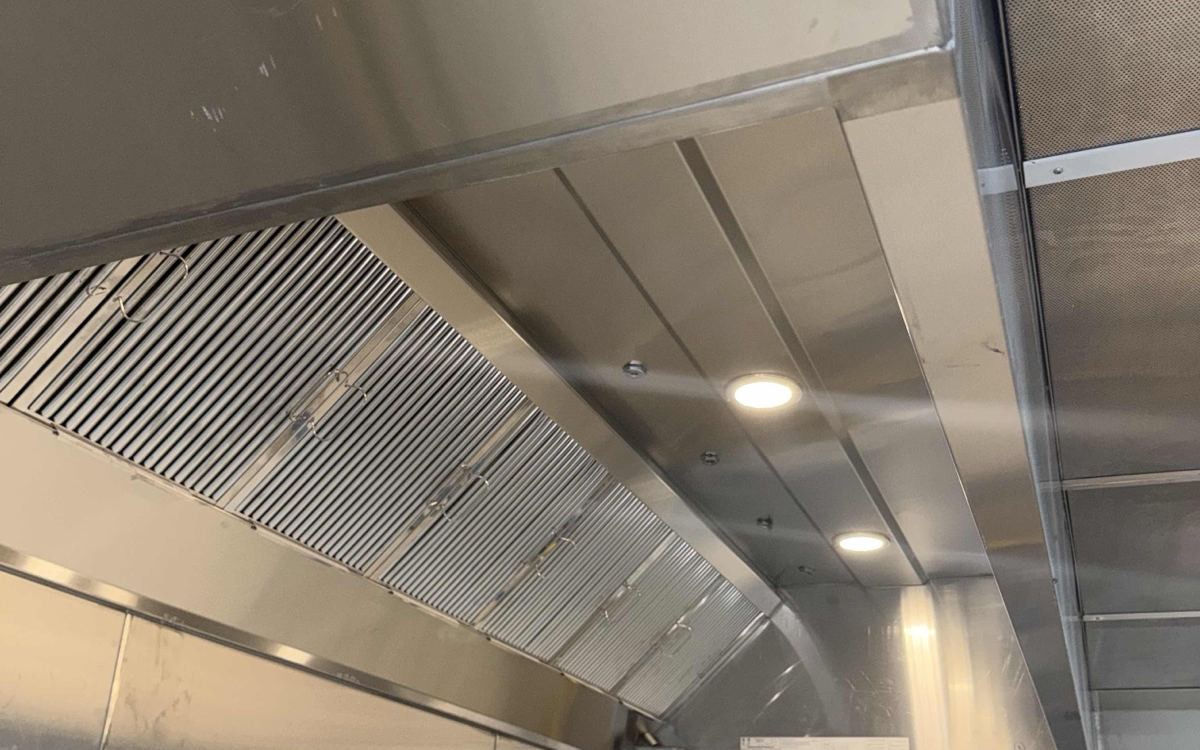
To open a restaurant in Florida you need approval from the state food regulator (DBPR) and from your local building department, fire marshal and utility. The state does not replace the local permits, and the local offices do not replace the state license. Do them in order and keep every approval on site.
Who you deal with
- DBPR, Division of Hotels and Restaurants. Licenses the restaurant and reviews the kitchen plan. Customer line: 850.487.1395.
- The local building department. Issues the building permit. Under Florida law it checks plans against the Florida Building Code. A certified fire safety inspector must find that the plans meet the Florida Fire Prevention Code and the Life Safety Code before the permit is issued.
- The local fire marshal. Reviews fire protection: hood suppression, extinguishers, exits, and alarms or sprinklers where required.
- The water and sewer utility. Sets the grease trap and interceptor rules, which differ by city and county. Wastewater approvals for seating also come from the Department of Health, FDEP or the local utility, depending on the site.
DBPR tells applicants directly that its knowledge is in state requirements and that it is very important to also contact local officials about city and county rules.
When DBPR plan review is required
DBPR plan review is required when a space is newly built, converted from another use, remodeled, or reopened after being closed at least 18 months. It is also needed when a menu change calls for different equipment or changes the concept. It is not needed for a space that is already licensed and has no changes, or for a shared licensed kitchen. If the building uses a septic system, the Department of Health or FDEP must approve it first. Food service is not allowed in a private residence.
What DBPR asks for with the application:
- A completed application.
- A floor plan drawn to scale with the equipment labeled.
- A sample menu.
DBPR says online applications are reviewed within 30 days. A variance request gets an answer within 90 days, or 30 days for an emergency. Plan review itself carries no fee.
A local company can take it from here. One form, free for restaurants.
Get connectedWhat the plan must show
DBPR's packet lists what the drawing needs. Among the items:
- Labeled work areas and storage.
- A utility sink and handwash sinks.
- A three-compartment sink, or a commercial dishwasher.
- Exits and door swing.
- The automatic fire suppression and hood system.
- The dumpster location on a non-absorbent surface.
- A grease trap, if one is outside.
Fire protection items on the DBPR plan are for reporting. DBPR notes that Class K extinguishers and automatic hood suppression are required when grease-laden vapors or smoke are produced. It passes possible fire violations to the State Fire Marshal or the local fire authority. Fire items do not cause DBPR to deny a plan, so settle them with the fire marshal separately.
DBPR does not approve the number of seats. The wastewater approval and the local fire authority limit the seating.
Approved plans stay valid for 18 months. You can ask in writing for one extension of up to six months before they expire. Plan approval does not guarantee a license.
The order of steps
- Check the space. Confirm with the local zoning office that a restaurant is allowed, and ask the utility about grease interceptor and seating limits.
- Get engineered drawings for the hood, grease duct, makeup air and suppression system. See hoods and exhaust and fire suppression.
- Open a DBPR online account and apply. Submit plan review with your license application, and pay the fees.
- Apply for the building permit. Your building department can have its own plan review, so ask which drawings it wants.
- Start building. Florida law lets a building department permit foundation or partial work before the full plan review is done, at the holder's own risk.
- Have a licensed company install and test the hood suppression system and the extinguishers. See fire extinguishers.
- Pass the local inspections. The building, electrical, plumbing and fire approvals come from the local offices, so keep proof of each.
- Schedule the DBPR licensing inspection. Do not serve the public until you pass and get a temporary license. Have the building, electrical, fire and plumbing approvals on site for the inspector.
Plan the hood test early. The Florida Mechanical Code requires a performance test before final approval, with the exhaust airflow, the makeup airflow and capture of smoke or steam checked.
How long the reviews take
DBPR and the local offices do not publish one timeline for a whole project, so this table shows only the review times we could source.
| Step | Time we could source |
|---|---|
| DBPR plan review, online application | Reviewed within 30 days |
| DBPR variance request | 90 days, or 30 days if urgent |
| DBPR approved plans stay valid | 18 months, one extension up to 6 months |
| Building permit review | Set by your building department. Ask them |
| Fire marshal plan review | Set by your fire marshal. Ask them |
Fees
DBPR lists the annual license by seating. A restaurant with no seating pays $242. One with 1 to 49 seats pays $262, and 50 to 149 seats pays $273. The scale rises to $357 for 500 or more seats. New businesses and changes of ownership add a $50 application fee. Your renewal month depends on your district.
For a build-out or a new kitchen, enter the ZIP code of the space on the form and we'll connect you with the number of local companies you choose (one to five).
Questions
Do I need DBPR plan review for a remodel?
Yes, if the work is a remodel, or if a menu change needs different equipment. A space that is already licensed with no changes does not need it.
Can I start building before DBPR approves my plans?
No. DBPR says it must approve plans before construction, remodeling or getting a license. Your building department may allow partial work early at your own risk, but ask both offices first.
Who approves the fire suppression system in a new kitchen?
The local fire marshal. The system has to be installed by a company licensed by the State Fire Marshal, and it must meet the codes Florida has adopted.
Can I open my restaurant the day the build is finished?
Not until you pass the DBPR licensing inspection and receive the temporary license. Keep the building, electrical, fire and plumbing approvals on site for the inspector.